€ 205


Still questions? Contact us
atom necklace | sterling silver
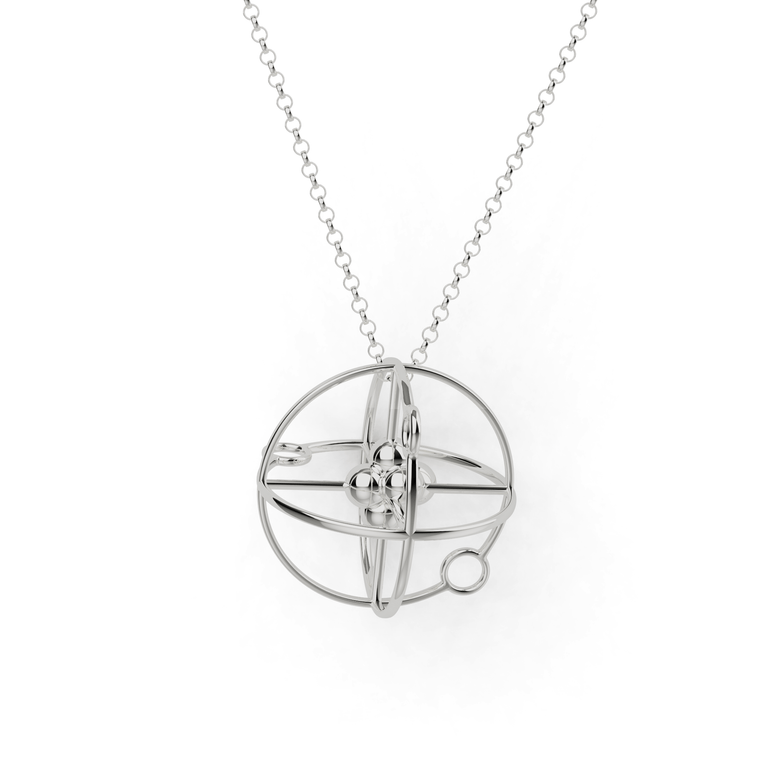
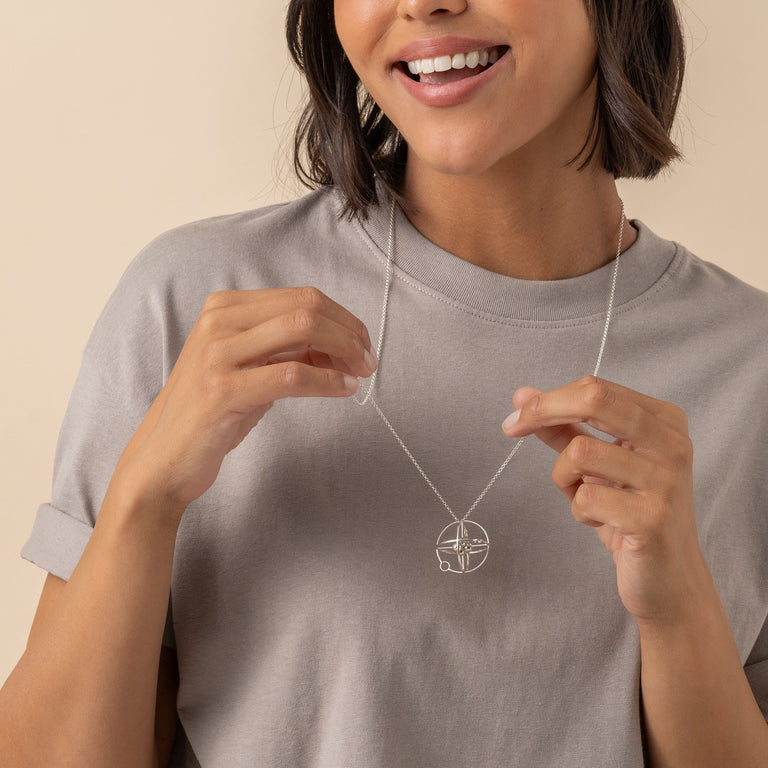
The atom is the universal symbol of science itself. Nucleus at the centre with protons and neutrons, electrons in probability clouds rather than fixed orbits. Everything in the universe is built from this unit and from the rules that govern how its electrons interact.
The Science Behind the Atom
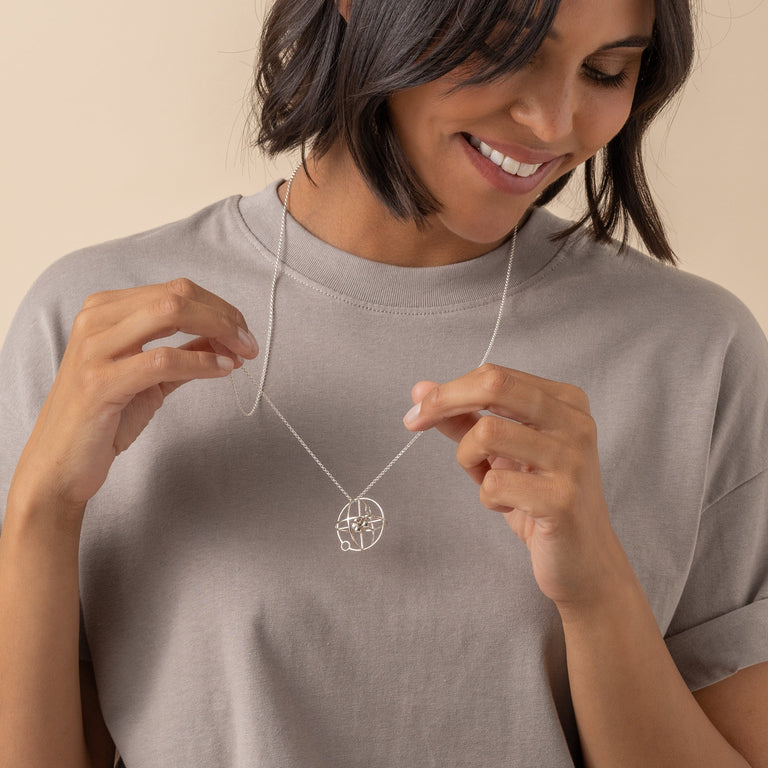
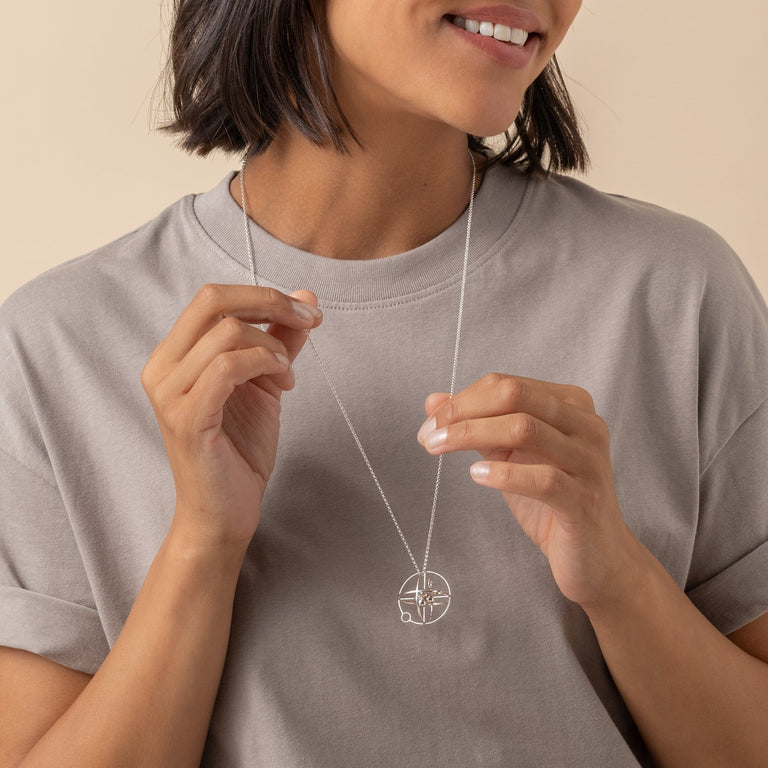
Rutherford's 1911 gold foil experiment revealed the nucleus (tiny, dense, positive core). Bohr's 1913 model proposed discrete electron orbits, explaining the hydrogen spectrum. Quantum mechanics replaced classical orbits with probability clouds (orbitals), but the Rutherford-Bohr atom remains the most recognizable scientific image in the world. The 29 mm pendant renders this iconic structure in three dimensions, not flat. At 80 cm, the chain sits long enough to wear over clothing or as a longer pendant. Every element on the periodic table is built from this same architecture: protons and neutrons in the nucleus, electrons in orbitals.
Who Will Recognise It
- physicists and chemists
- science teachers and educators
- nuclear medicine and radiology professionals
- anyone for whom the atom represents where knowledge begins
About 40% of orders go to science educators and students. The rest are self-purchases by researchers who know the Rutherford-Bohr icon is both scientifically foundational and instantly recognizable.
Explore Related Math and Physics Jewelry
FAQ
Who wears the 3D atom necklace?
Physicists, chemists, materials scientists, and anyone who knows that the flat icon is technically a simplification. The 3D version says you understand the model's history and appreciate the upgrade.
Why is Niels Bohr's model still so recognizable?
Bohr's 1913 model explained the hydrogen emission spectrum from first principles, a breakthrough that vindicated quantum theory. Quantum mechanics later replaced his classical orbits with probability clouds, but the visual icon endured. It appears in textbooks, on logos, in advertisements, as a shorthand for "science." Decades of cultural repetition made it the most recognizable scientific symbol in the world.
What's the material, size, and chain?
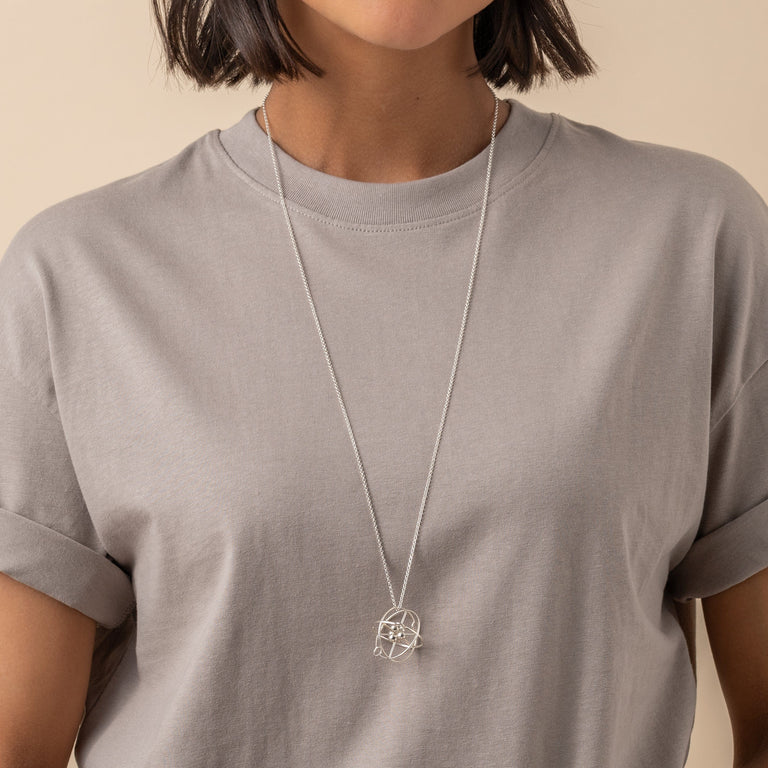
29 mm pendant in 925 polished sterling silver, nickel-free and hypoallergenic. 80 cm sterling silver chain with lobster clasp (long enough to wear over a sweater or for a longer pendant look). High-polish finish. Comes in a ready-to-gift, eco-friendly jewelry box with the 30-day “Love It or Return It” policy. Free worldwide DHL Express shipping (1-5 business days).
Why is this chain longer than most necklaces?
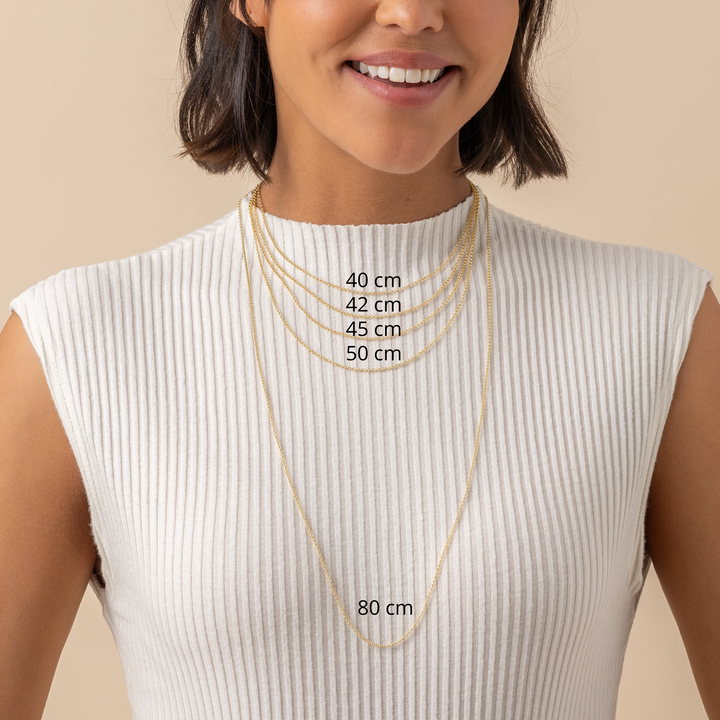
The 80 cm length was chosen to sit at the sternum or lower, creating a different visual presence than a standard 45 cm pendant. The longer hang works for anyone who prefers pendant pieces to sit closer to the chest, or for layering under other necklaces.
Math & Physics
Unlock the elegance of the abstract with our math and physics-inspired jewelry collection. These carefully crafted pieces mirror the profound equations and natural laws that shape our understanding of the universe. Experience the allure of fractals, the rhythmic beauty of pi, and the celestial wonder of astral formations—each piece serves as a wearable homage to the artistry inherent in scientific inquiry.
Find your perfect fit: measure an Existing Ring
Finding out your ring size at home is a simple process and can help you shop for jewelry online with confidence.
Necklace length guide