€ 185


Still questions? Contact us
fruit bat skull necklace | sterling silver
The fruit bat belongs to a family of megabats unlike any other mammal in the air. No echolocation. No sonar clicks rebounding in the darkness. They hunt by sight and smell through the night canopies of tropical forests, finding ripe fruit by color and scent, eating their body weight in mangoes and figs while moving pollen between flowers. A 23 mm sterling silver pendant shaped like the skull of Pteropodidae, the Old World fruit bat.
The Science Behind the Fruit Bat Skull
The Pteropodidae family includes roughly 190 bat species across Africa, Asia, and Australia, all of them frugivorous and all of them relying on vision and smell rather than echolocation. The golden-crowned flying fox is the largest, with a wingspan up to 1.7 metres. Unlike echolocating microbats, which have small eyes and elaborate ear structures, fruit bats have large forward-facing eyes and simple ears. They are essential pollinators and seed dispersers in tropical ecosystems, driving the reproduction of hundreds of plant species. Fruit bats are also reservoir hosts for several emerging zoonotic viruses including Hendra, Nipah, Marburg, and related ebolaviruses and lyssaviruses, making them a focal point for pandemic surveillance research.
A Quiet Symbol For
- tropical ecologists and conservation biologists tracking pollinator networks and forest regeneration
- virologists and epidemiologists studying zoonotic spillover and reservoir host dynamics
- bat biologists and mammalogists who distinguish fruit bats from the wider order Chiroptera
- people who love the night forests where these bats hunt and the quiet intelligence of sight-based predation
These are bats that hunt in silence.
Explore Related Animal Skull Jewelry
- Raven skull necklace | silver
- Raven skull necklace | gold vermeil
- Lizard skeleton earrings | silver
- Macaque skull necklace | silver
- Orangutan skull necklace | silver
FAQ
How are fruit bats different from the bats that use echolocation?
Fruit bats and echolocating microbats are separated by millions of years of evolution. Microbats are found worldwide and hunt insects on the wing using high-frequency clicks and returning echoes to map prey in complete darkness. Fruit bats are larger, Old World species that use vision and smell to find ripe fruit in the canopy. Microbats have tiny eyes and elaborate ear structures. Fruit bats have large forward-facing eyes and simple ears. The two groups represent fundamentally different hunting strategies.
Why are fruit bats important for tropical forests?
Fruit bats are keystone species in tropical pollination and seed dispersal. Many flowers in African and Asian rainforests depend entirely on bats for pollen transfer. In return, these flowers produce large quantities of nectar that fruit bats drink as a calorie source. When fruit bat populations decline, flowering trees often fail to set seed, and the forest structure shifts. Conservation of fruit bats is conservation of the entire forest regeneration cycle.
What size is the pendant and what chain comes with it?
925 sterling silver, 23 mm pendant on a 45 cm sterling silver chain (ø 1.8 mm) with lobster clasp and 5 cm extender. Nickel-free and hypoallergenic. Free worldwide DHL Express in 1-5 business days, with all import duties and taxes covered. 30-day “Love It or Return It” returns.
Is there a gold version?
This pendant is currently available in silver only. No gold version exists at this time.
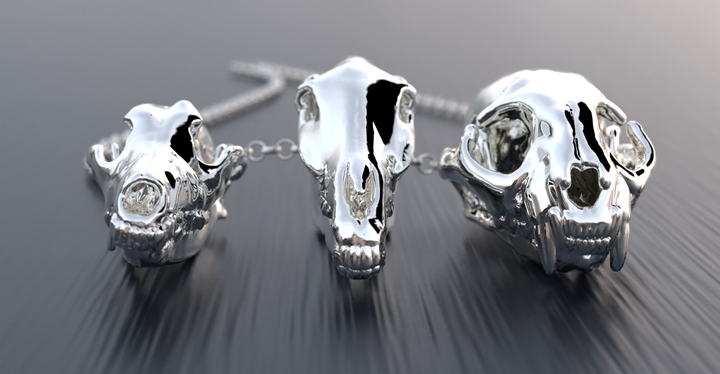
Animal skulls & bones
Drawing upon the intricate architecture of animal anatomy, our collection captures the haunting beauty of skulls and bones. Each piece serves as a tactile memento mori, reminding us of the delicate balance between life and death. Crafted with scientific accuracy, these masterpieces evoke a sense of awe and curiosity, offering a tribute to the intricacies of the natural world. Far more than mere adornments, they are conversation-starters that provoke intellectual dialogue.
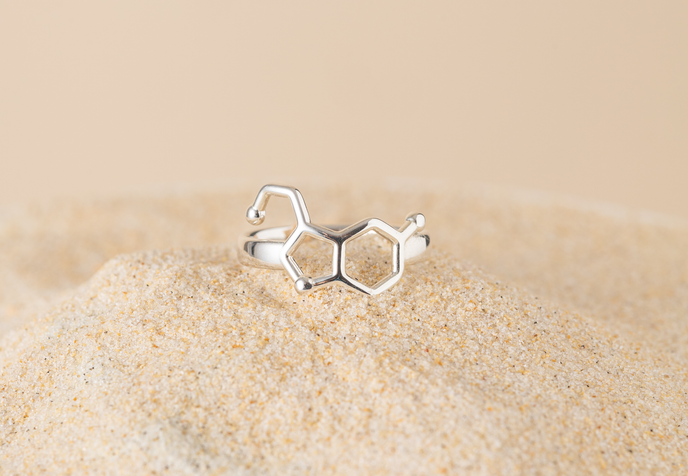
Find your perfect fit: measure an Existing Ring
Finding out your ring size at home is a simple process and can help you shop for jewelry online with confidence.
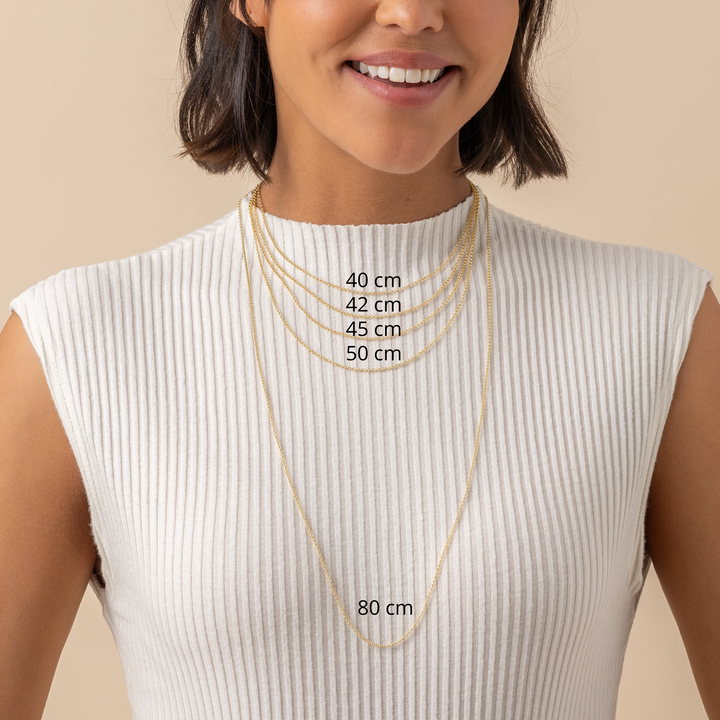
Necklace length guide