
€ 155


Still questions? Contact us
DNA necklace H | sterling silver
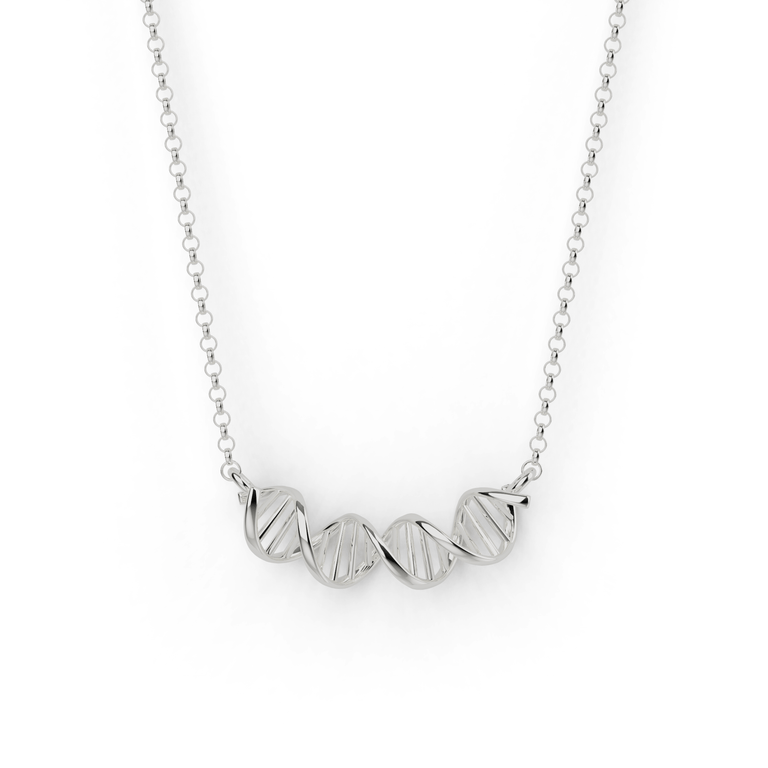
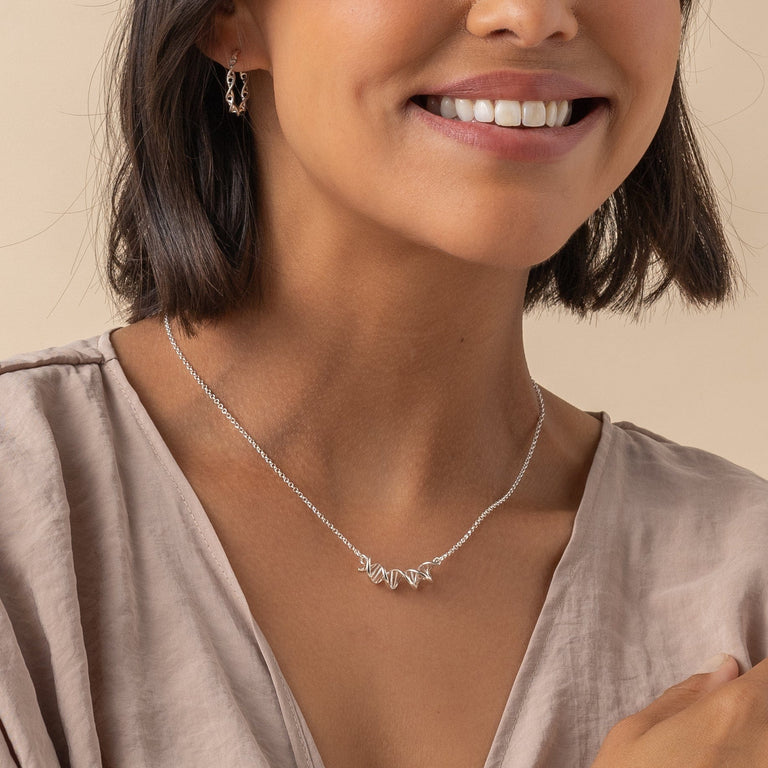
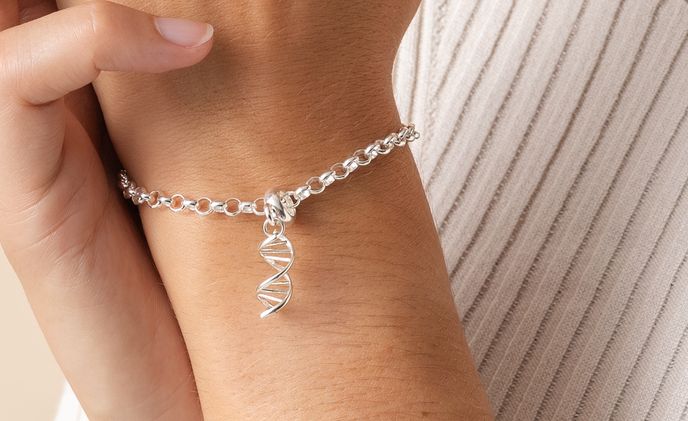
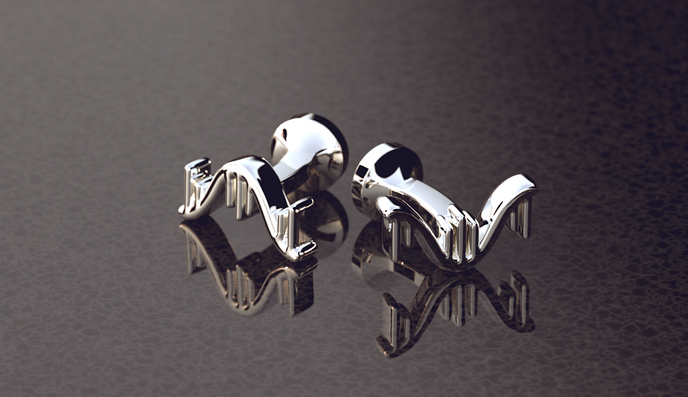
Two backbones, ten base pairs per turn, one continuous spiral. The horizontal pendant captures the double helix at its most readable, both strands extended at full width with the major and minor grooves spread across the pendant. Sterling silver, 30 mm, the form of the molecule everyone draws on a whiteboard.
The Science Behind the Horizontal Helix
The major groove and the minor groove are the two channels running along the helix where the backbone strands sit farther apart or closer together. The major groove is wide enough for proteins to read the DNA sequence directly, without separating the strands. That is how every transcription factor finds its target gene, how restriction enzymes locate their cut sites, how zinc-finger and homeodomain proteins recognise their motifs. The minor groove is narrower and harder to read directly, but several drugs slide into it and disrupt DNA function from there: distamycin, netropsin, and a class of antibiotics that target bacterial replication. The horizontal orientation of this pendant shows both grooves clearly because the helix sits with its full width visible. It is also the orientation almost everyone draws by default, the textbook form, the conference-poster form, the classroom-whiteboard form.
The Audience
- molecular biologists, structural biologists, and biophysicists
- genetics researchers and biotech professionals
- biology and medical students through their first genetics rotation
- science teachers and communicators who draw the helix every week
- anyone whose work or family history makes the molecule personal
Most often picked up by working scientists who want the molecule on them in the lab and at conferences. Sterling silver because gold reads as the gift version of the same piece.
Explore Related Genetics Jewelry
- DNA necklace H | gold vermeil
- DNA necklace V | silver
- DNA necklace V | gold vermeil
- Circular DNA necklace | silver
- DNA earrings | silver
FAQ
What's the difference between the horizontal and vertical DNA necklaces?
The molecule is identical. The orientation isn't, and neither is the way the chain attaches. The horizontal version (H, this one) is 30 mm wide, with the helix laid horizontally and the chain attaching at two side loops, one at each end of the helix. Both backbones extend at full width across the pendant, with the major and minor grooves spread across the visible face. The vertical version (V) is 20 mm tall, with the helix oriented vertically and the chain attached at a single loop on top, so the pendant dangles in textbook-column orientation. Both show the molecule from the side. H tends to be the choice when people want the structure unmistakable from across a room. V tends to be the choice when they want it more discreet.
Why do the major and minor grooves matter?
The major groove is wide enough for proteins to read the DNA sequence without unwinding the helix. That is how every transcription factor finds its target gene, how restriction enzymes recognise their cut sites, and how some antibiotics target bacterial replication. The minor groove is narrower and harder for proteins to read directly, but several drugs slide into it and disrupt DNA function from there. The horizontal pendant shows both grooves clearly because the helix sits with its full width visible. At any other orientation, one groove obscures the other.
What size is the pendant and what does it ship with?
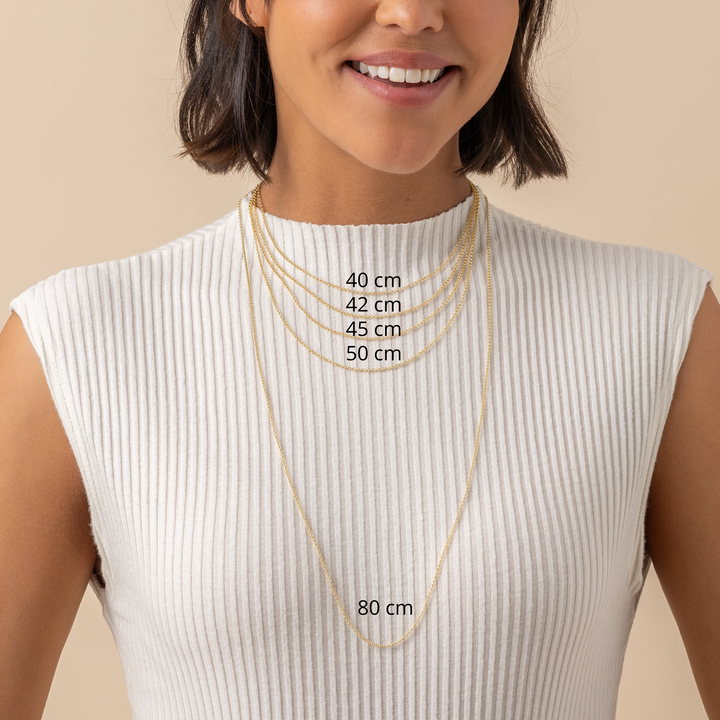
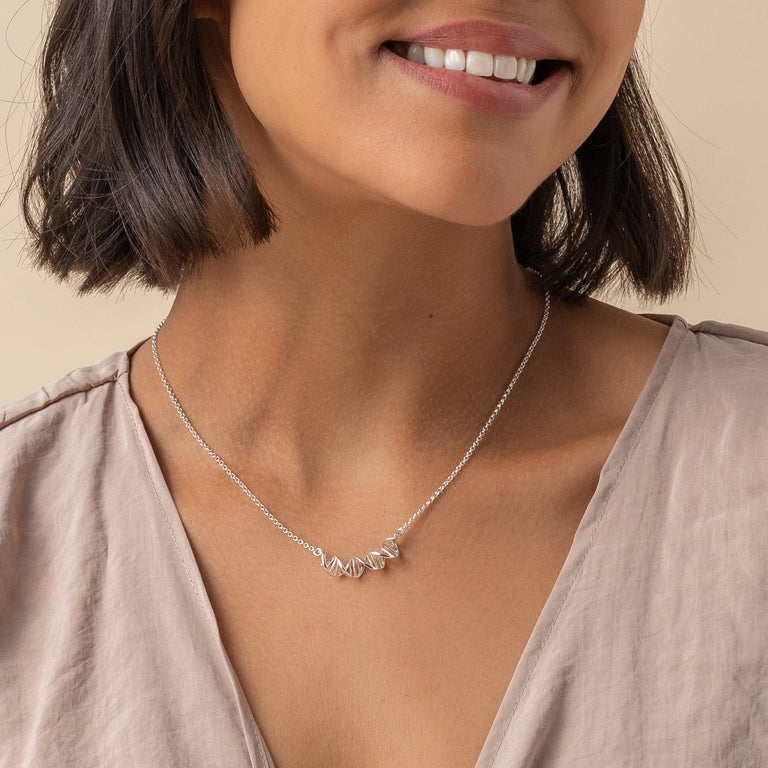
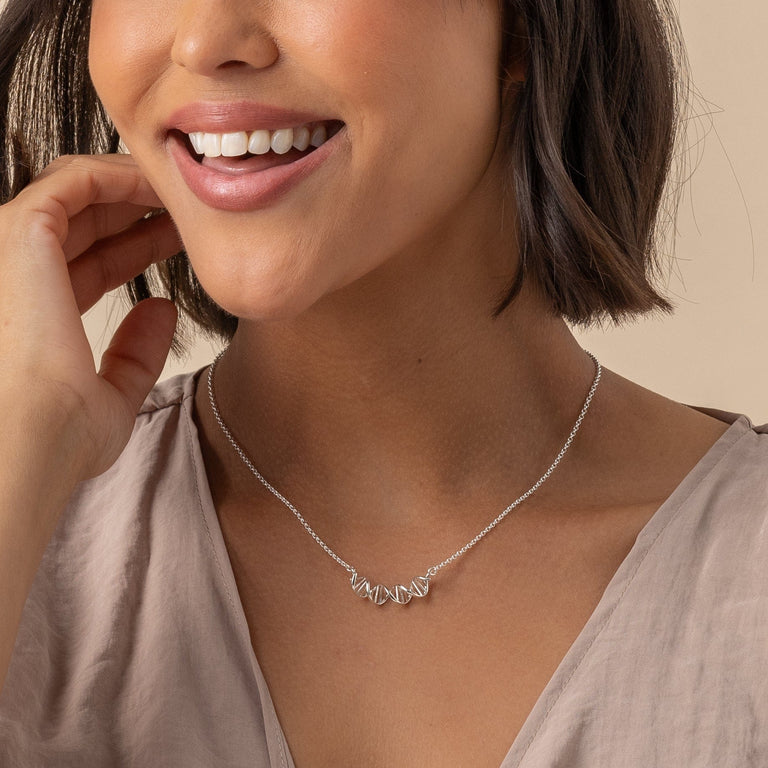
The pendant is 30 mm wide in sterling silver (925), nickel-free and hypoallergenic, on a 45 cm sterling silver chain (1.8 mm width, lobster clasp) with a 5 cm extender, so it sits at the collarbone or a little below. Free worldwide DHL Express shipping in 1-5 business days, all import duties covered, in a ready-to-gift jewelry box.
Which DNA necklace is right for me: H silver, H gold, V silver, or V gold?
Pick by orientation first, material second. If you want the helix unmistakable from across a room, go horizontal (H). If you want it discreet, go vertical (V). After that, sterling silver reads as the working scientist's everyday choice, the lab and conference piece. Gold vermeil reads as the milestone version of the same molecule, more often picked as a gift or after a defence. The silver H, this one, is the most-bought of the four. It is the form most people picture when they think of DNA jewelry.
Genetics
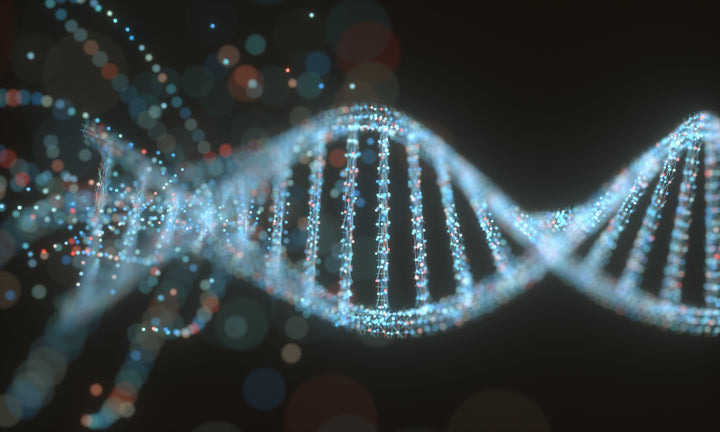
Our genetics-inspired jewelry captures the essence of life's code in striking detail. Crafted to mirror the DNA double helix, each piece is more than an aesthetic marvel—it's a tribute to the complexity of our genetic makeup. Far from ordinary, this collection combines scientific precision with artistic flair, making each item a captivating blend of form and function. It's not just an accessory; it's a meaningful representation of the miracle that is genetics.
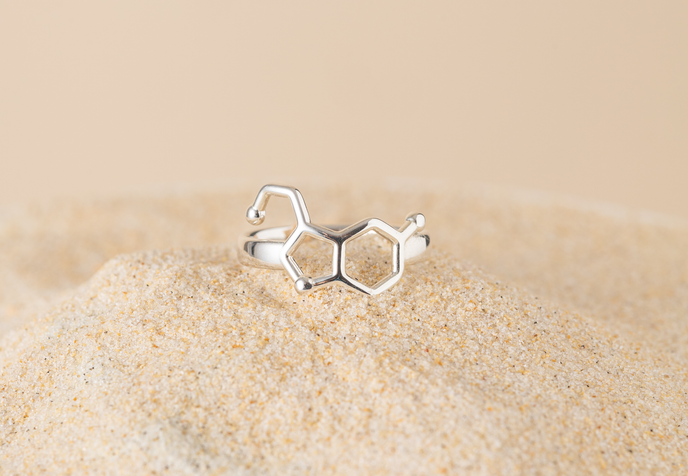
Find your perfect fit: measure an Existing Ring
Finding out your ring size at home is a simple process and can help you shop for jewelry online with confidence.
Necklace length guide