€ 160


Still questions? Contact us
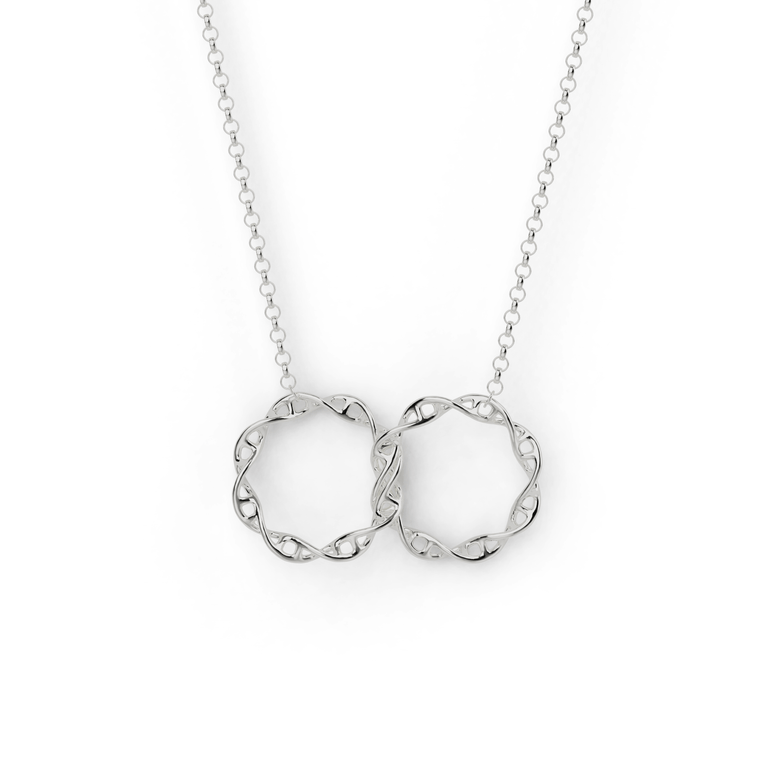
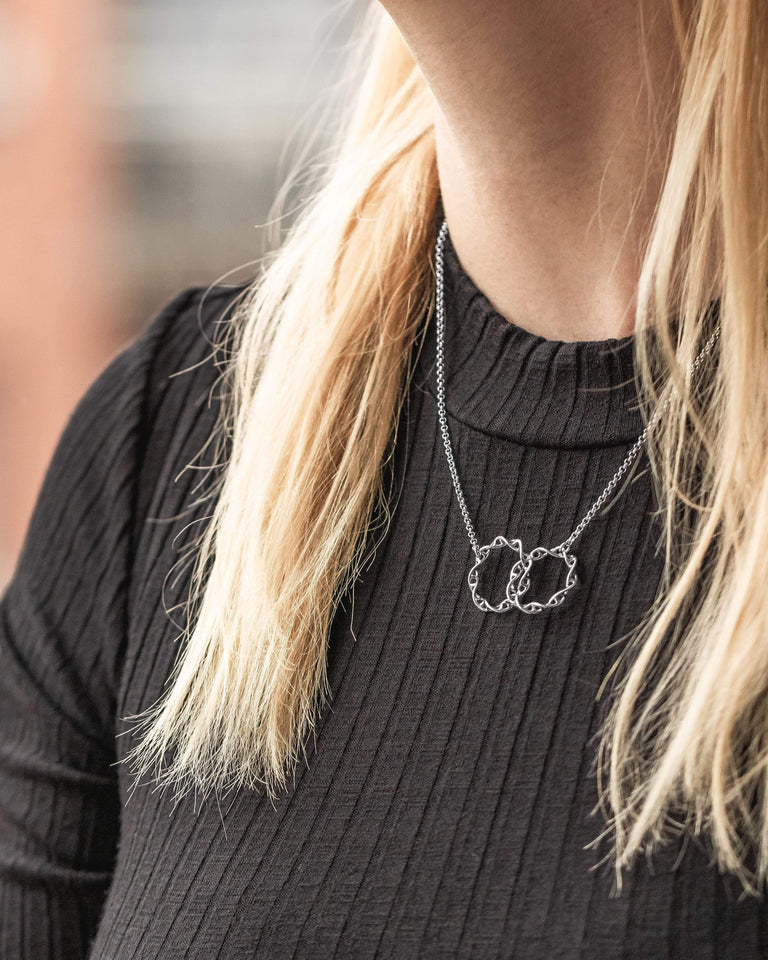
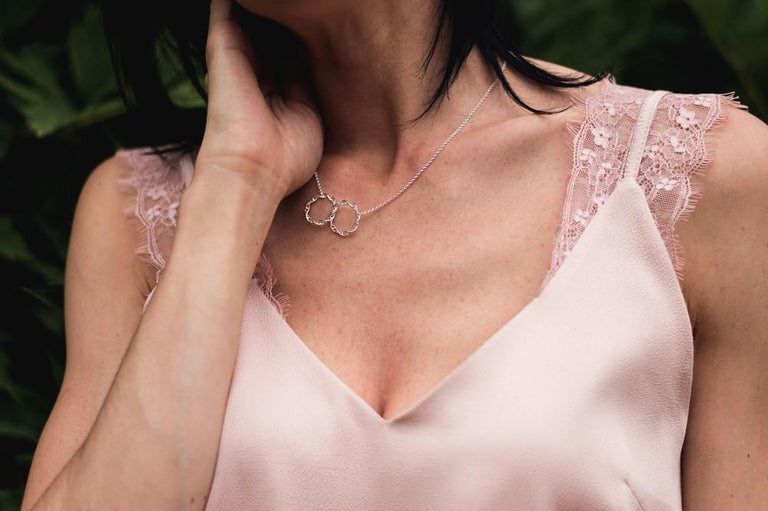
Interlocked DNA necklace | silver
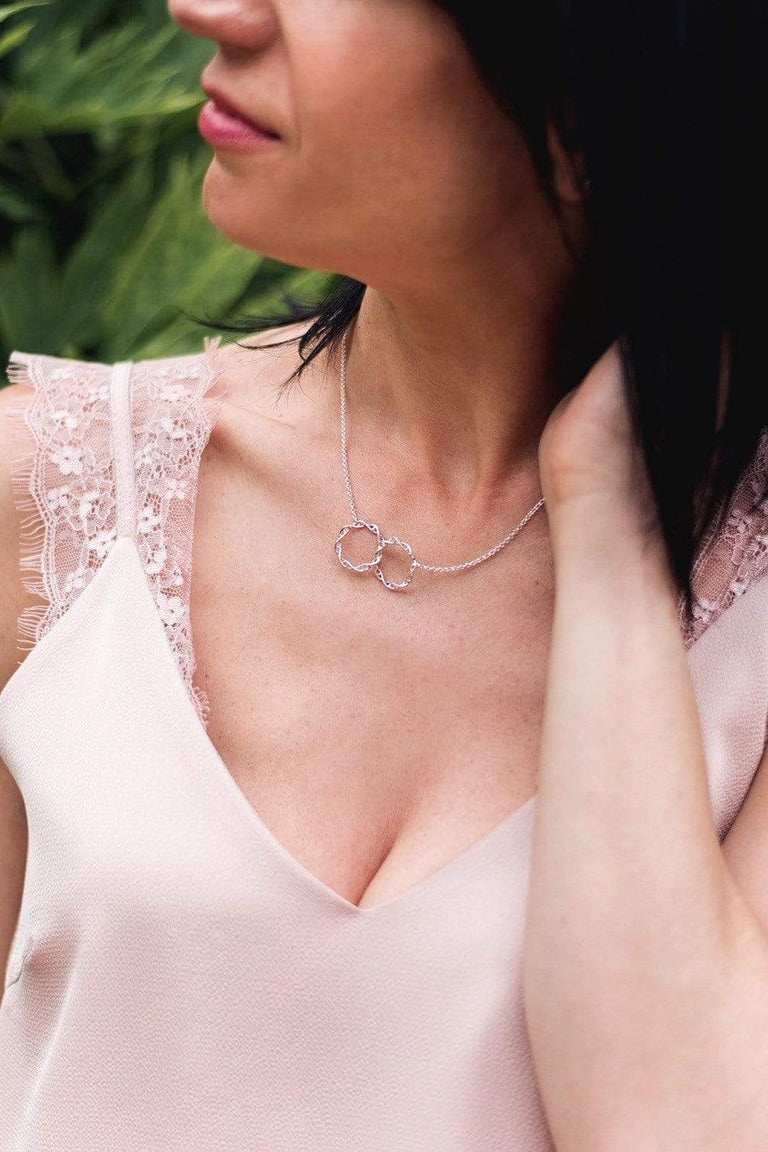
Two helices in physical contact, rendered at 36 mm. The interlocked geometry references something that happens inside cells every time they divide: DNA molecules linking, threading, and unlinking through one another. The structure is compact, but the topology it captures is at the centre of how cells solve replication.
The Science Behind Interlocked DNA
After bacterial DNA replication, the two daughter chromosomes are physically interlinked, a state called catenation, and must be separated before the cell divides. Topoisomerase IV solves the problem by passing one DNA duplex through a transient double-strand break in the other, then re-sealing the break. In human cells the equivalent role during mitosis falls to topoisomerase II. Drugs that inhibit topoisomerase II, including doxorubicin and etoposide, work by trapping the enzyme mid-cleavage, leaving lethal DNA breaks in dividing cells. The interlocked geometry on this pendant is not a stylistic choice. It is the topology that several widely used cancer chemotherapies target.
A Quiet Symbol For
Molecular biologists, biochemists, and oncology researchers who work with DNA topology, topoisomerase enzymes, or DNA-targeted chemotherapy.
- molecular biologists working on DNA replication or recombination
- oncology researchers and clinical pharmacologists
- structural biologists studying topoisomerase mechanism
- graduate students who have spent a semester thinking in three dimensions about DNA
Often given to colleagues finishing a PhD on chromosome dynamics or to a researcher transitioning from bench science into a clinical oncology role.
Explore Related Genetics Jewelry
- Interlocked DNA necklace | gold vermeil
- DNA necklace V | silver
- Crossed DNA ring | silver
- Circular DNA necklace | silver
- Mitosis necklace | silver
Frequently Asked Questions
Why does the interlocked geometry matter scientifically?
It captures the moment two DNA molecules are physically linked through one another. That topology occurs routinely after DNA replication and during recombination, and it is the structural problem that topoisomerase enzymes evolved to solve.
Who reaches for this rather than a single helix?
Researchers who think about DNA as a topological object: people working on chromosome biology, replication forks, recombination, or topoisomerase-targeted chemotherapy. The single helix is the molecule. The interlocked piece is the mechanism.
What are the specs and what is the return policy?
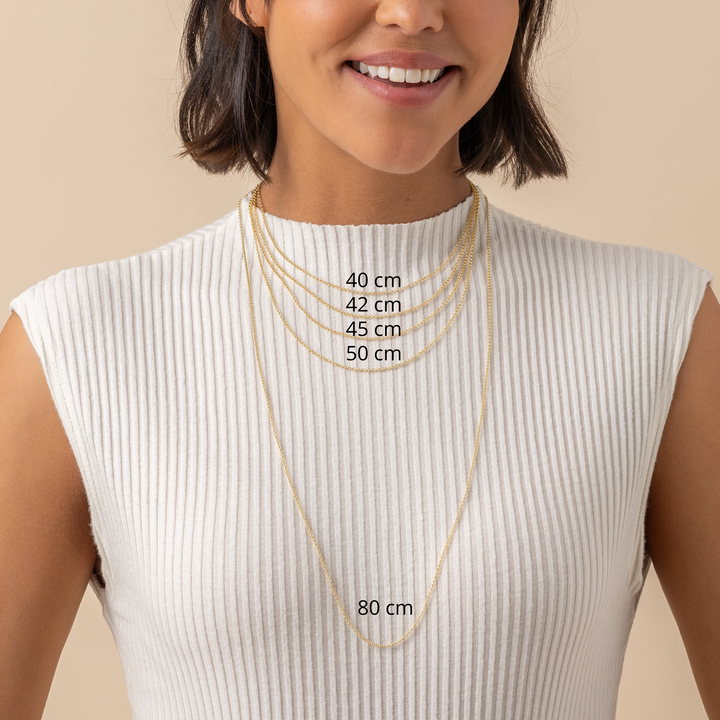
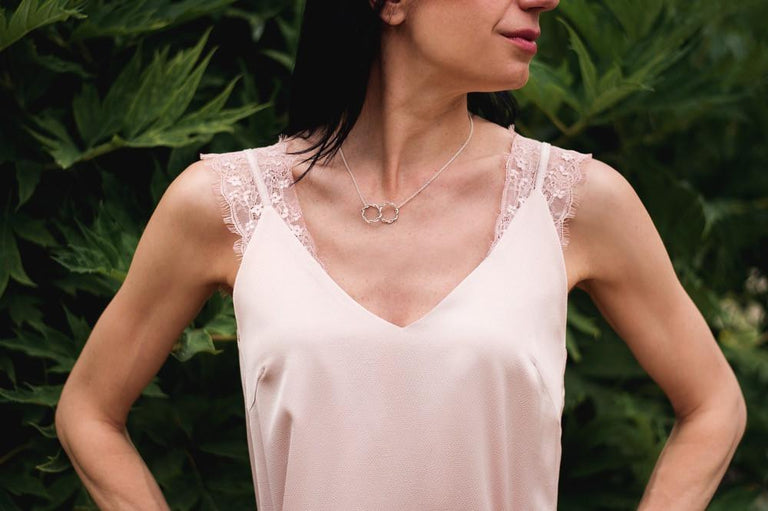
925 sterling silver, 36 mm pendant, 45 cm chain with a 5 cm extender. Nickel-free and hypoallergenic. Ships free worldwide via DHL Express in 1-5 business days, with all import duties and taxes covered. 30-day “Love It or Return It” returns.
Is this available in gold?
Yes. The same 36 mm interlocked DNA pendant is available in 18K gold vermeil at the same size and chain length. Identical structure, different finish.
Genetics
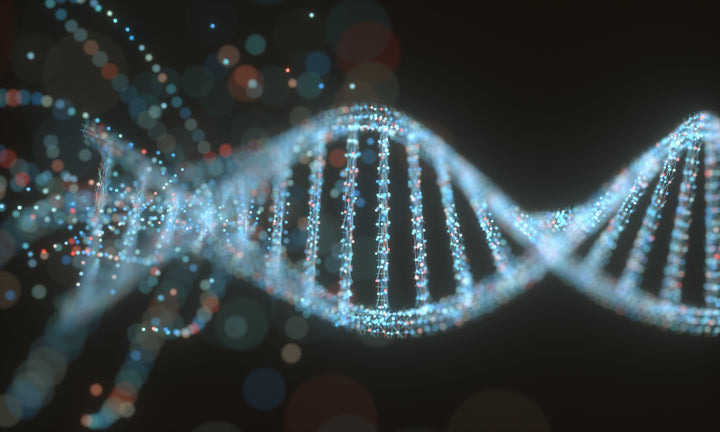
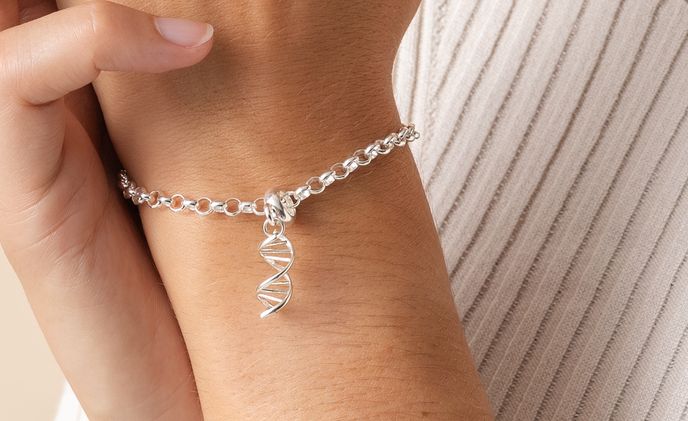
Our genetics-inspired jewelry captures the essence of life's code in striking detail. Crafted to mirror the DNA double helix, each piece is more than an aesthetic marvel—it's a tribute to the complexity of our genetic makeup. Far from ordinary, this collection combines scientific precision with artistic flair, making each item a captivating blend of form and function. It's not just an accessory; it's a meaningful representation of the miracle that is genetics.
Find your perfect fit: measure an Existing Ring
Finding out your ring size at home is a simple process and can help you shop for jewelry online with confidence.
Necklace length guide