€ 145


Still questions? Contact us
Orion necklace L | sterling silver
You can find Orion in any winter sky from the first frost to spring, and you can find it without a chart. The constellation people learn first and the one they can still find decades later, even if they couldn't name a single other constellation in between.
The Science Behind Orion
Orion is an equatorial constellation visible from both hemispheres for most of the year. The three belt stars (Alnitak, Alnilam, and Mintaka) are among the most aligned naked-eye objects in the sky. Betelgeuse (Alpha Orionis) is a red supergiant at the hunter's right shoulder, with a radius roughly 700 times that of the Sun, in late stellar evolution and expected to explode as a supernova within the next 100,000 years. Rigel (Beta Orionis) is a blue supergiant of roughly 25 solar masses at the left foot. Below the belt, the Orion Nebula (M42) is a stellar nursery 1,344 light-years away where new stars are forming.
Who Will Recognise It
Astronomy has both a professional and amateur community attached to this constellation.
- astronomers and astrophysicists working on stellar evolution or star formation
- amateur astronomers and dark-sky observers
- astronomy educators and planetarium staff
- anyone who finds Orion first when stepping outside on a clear winter night
Often given as a small marker for someone who watches the sky on purpose.
Explore Related Math and Physics Jewelry
- Orion necklace L | gold vermeil
- Orion necklace S | silver
- Cassiopeia necklace | silver
- Ursa major necklace | silver
- Saturn necklace | silver
FAQ
Will an astronomer or stargazer wear this?
Among constellation pendants, Orion has the highest recognition rate. Anyone who has stepped outside on a clear winter night and looked up has seen it. We see it bought as a graduation gift in astronomy programmes, as a quiet personal marker for amateur observers, and as a parent-to-child gift for the early astronomy student.
What is the most surprising thing about Orion?
Betelgeuse, the red supergiant at the hunter's right shoulder, is in the late stages of its life. It is expected to go supernova within the next 100,000 years, possibly tomorrow, possibly long after we are gone. When it does, it will be one of the brightest objects in the night sky for months, visible during the day.
What about size, material, and chain?
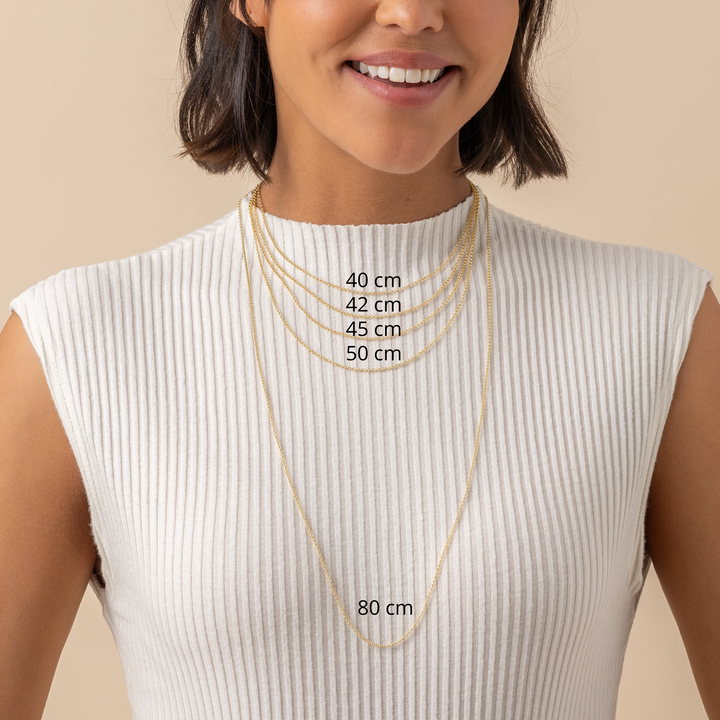
42 mm large-format pendant in 925 polished sterling silver, nickel-free. 45 cm sterling silver chain with a 5 cm extender. Free worldwide DHL Express, 1-5 business days, all duties and taxes covered. 30-day “Love It or Return It” policy.
Is there a smaller version?
Yes. The Orion necklace S is 21 mm in sterling silver, half the size of this large version. The L (42 mm) is the statement-piece size. There is also an Orion necklace L in gold vermeil at the same 42 mm pendant size.

Math & Physics
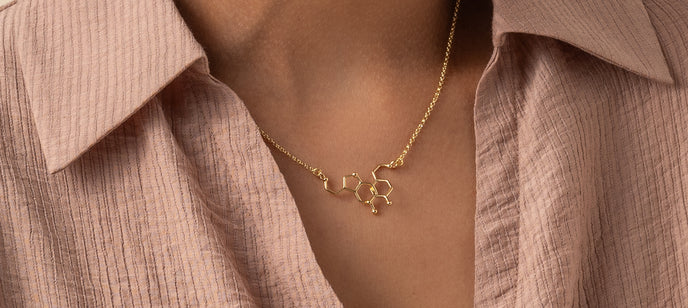
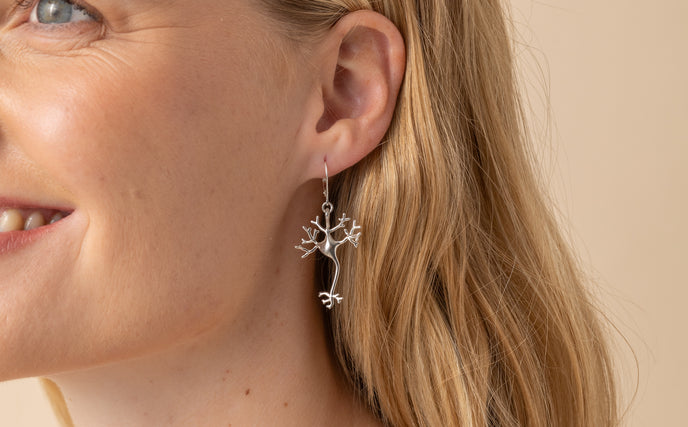
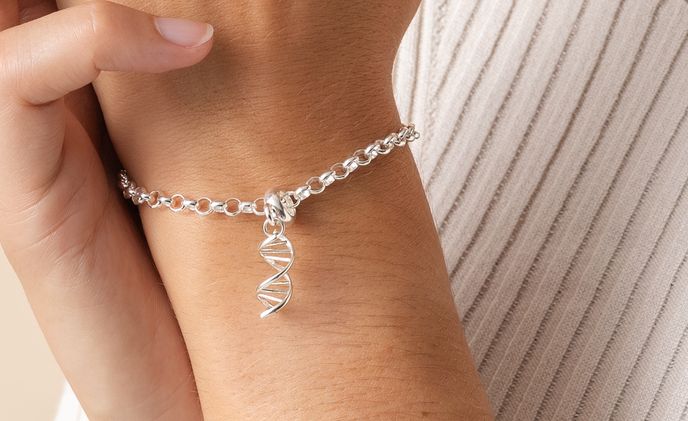
Unlock the elegance of the abstract with our math and physics-inspired jewelry collection. These carefully crafted pieces mirror the profound equations and natural laws that shape our understanding of the universe. Experience the allure of fractals, the rhythmic beauty of pi, and the celestial wonder of astral formations—each piece serves as a wearable homage to the artistry inherent in scientific inquiry.

Find your perfect fit: measure an Existing Ring
Finding out your ring size at home is a simple process and can help you shop for jewelry online with confidence.
Necklace length guide